It's almost midnight. Prime Day is on. You've got three things in your cart, each one shouting "63% OFF" in big red letters, and a small voice in your head is asking: is this actually a good price, or are they just telling me it is?
We got tired of guessing. So we checked. We pulled the real price history of 45,776 products and looked at what they cost during Prime Day 2026 versus what they normally cost. Not the "list price" Amazon crosses out — the real, day-to-day price these things actually sell for.
vs their normal price
than the week before
when it was real
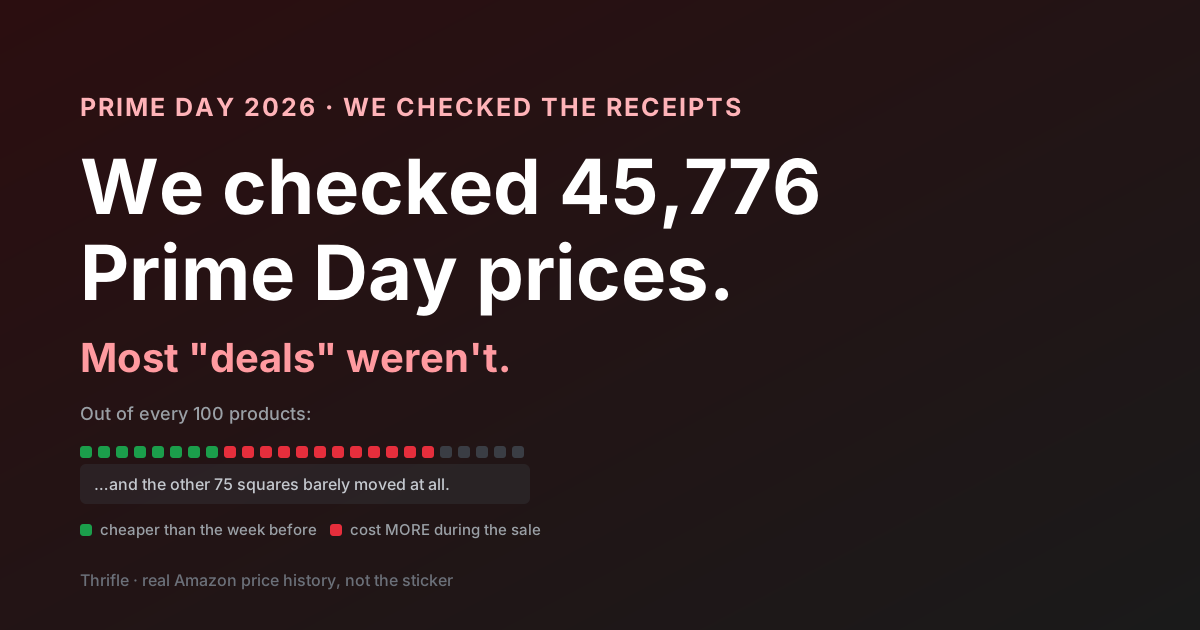
The short version: most "deals" weren't deals. Only about 1 in 5 products was truly cheaper than its normal price — and here's the part almost nobody tells you: more products went UP in price during Prime Day than dropped below what they cost the week before.
The trick behind a "deal"
A discount only means something if you know the real "before" price. So here's a trick a lot of sales lean on: take a $40 item, put an "$80" list price on it (the "MSRP" almost nobody actually pays), sell it for $40, and call it "half off." It was never $80. It's just $40 wearing a costume.
We ignored the costumes. For every product, we asked one plain question: was it cheaper during Prime Day than it normally is? Most of the time, the answer was no.
Picture 100 things in a cart
Imagine 100 random products people bought on Prime Day. Compared with the week before, here's how they really shook out:
The wild part: prices that went UP
That "12 cost more" group is the strange one — and we're not talking tiny wiggles. Take the Apple Watch SE 3: it sat around $249 the week before Prime Day, jumped to about $369 during the "sale," and then just… stayed there after it ended. A smartwatch, a tablet, even socks and t-shirts — same story. Higher during the big event, and still higher when the confetti cleared.
We can't read Amazon's mind, and plenty of these come from other sellers, not Amazon itself — dynamic-pricing software nudges prices up and down all day. But the prices are the prices, and we only counted the ones where the higher price stuck.
Okay, but real deals DO exist
It's not all bad news. Real deals are out there. You just have to know where to look, and the answer is surprisingly clear: electronics.
Share of products in each category that were genuinely cheaper than the week before.
About 1 in 7 gadgets was truly cheaper, and almost 1 in 3 was a real discount off its normal price, roughly double every other category. We found a Crocs Unisex Bluey Classic Clogs for 54% off, a Beneful Baked Delights Hugs - Beef & Cheese 8.5 oz - Pack of 2 for 38% off, and a SAMSUNG 32" UJ59 Series 4K UHD for 32% off — all the genuine article.
The catch? The bigger the item, the better your odds. The cheap stuff that quietly fills your cart at 2am, like the $6 gadgets and $9 add-ons, almost never moved. Under $10, only about 1 in 17 was actually cheaper. The real savings hide on the pricey things people research — laptops, big baby gear, appliances.
And when a deal is real, it's usually small
One more honest note. Even when a discount was genuine, it tended to be modest. Half of the real deals were under about 11.1% off. Those giant numbers on the banner are real for a tiny slice of products, and almost never the one sitting in your cart.
If Prime Day felt a little "meh" this year, you weren't imagining it. Shoppers spent about 17% less than last year, and the share who said they were happy with the deals slipped from 68% to 59%. People are catching on.
The one habit that fixes all of this
So how do you stop getting played? One habit handles almost all of it: check the price history before you buy. If you can see what something normally costs, you instantly know whether today's price is a real deal or just a sticker. So we built a free tool that does exactly that.
Is that "deal" actually a deal?
Paste any Amazon link into Thrifle and we'll tell you in one line whether today's price is genuinely low or just dressed up, based on its real history — not a made-up "list price."
Check a price free →Prime Day isn't a scam. It's just a sale, and a sale is only as honest as its "before" price. Now you've got a way to check. Use it, and the next time something yells "70% OFF," you can decide for yourself whether it's telling the truth.
Want the full breakdown of every category, every price range, and exactly how we measured it? Read the complete Prime Day 2026 price study.
Corrections & updates
July 6, 2026 — headline revised. This article originally ran as “Most Deals Weren’t Real.” Readers rightly pointed out that “deals” implied we audited claimed deals only — this piece measures our whole tracked catalog, because Prime Day is marketed store-wide (Amazon’s own words: “millions of member-exclusive deals worldwide”). Same data, same numbers, clearer words. The deals-only question now has its own study: The Prime Day Verdict.
Disclosure & independence: Thrifle participates in Amazon’s affiliate program — purchases through our links may earn us a commission. We’re not here to bash Amazon; we exist to be an impartial layer of truth between shoppers and stores, and we publish what the data says either way — including that 87% of the deals Amazon promoted were genuine.